
• info@samparksoftwares.com
  • 98734-15969
Vision AI for a commercial vehicle parts manufacturer, covering PPE detection, restricted-zone monitoring, evidence capture and safety response across multiple plants

Case Study: AI video intelligence

Case Study / Vision AI & Video Analytics

Plant safety exceptions surfaced in real time across 50+ manufacturing plants

We built an AI-powered computer vision layer for a large automotive parts manufacturing group, connecting live camera streams, plant safety rules, restricted-zone intelligence, evidence capture and incident response workflows across 50+ plants.

50+ plants AI live camera intelligence Focus safety, evidence and operational cost control

The platform moved plant monitoring from passive footage to actionable AI events

CCTV feeds were not enough. The customer needed AI to interpret events inside plant environments, detect safety exceptions, identify restricted-area movement, capture evidence and alert the right teams before incidents turned into larger operational risks.

The solution used computer vision models, camera-to-zone mapping, plant-wise rule configuration, event metadata, evidence clips and response workflows so safety and operations teams could act on visible exceptions, not search through hours of footage.

Input layer Live CCTV / IP camera streams from plant floors, gates, storage zones and restricted areas.
AI layer PPE detection, unsafe action detection, zone intrusion, crowd movement, vehicle and gate intelligence.
Output layer Alerts, event evidence, dashboards, audit trails, escalation queues and response workflows.
Business Context

Safety intelligence had to work across real plant conditions

Manufacturing plants have complex movement: workers, contractors, forklifts, trucks, machine areas, storage zones, loading bays and restricted spaces. Manual monitoring is limited, and footage review usually happens after an event has already occurred.

The customer needed a live AI system that could identify exceptions consistently, reduce dependence on manual watching, preserve visual evidence and help teams avoid preventable safety, compliance and downtime costs.

Camera diversity Different camera angles, lighting conditions, plant layouts and motion patterns had to be handled plant by plant.
False positives Models had to be tuned for practical plant conditions so alerts stayed useful for operations teams.
Zone rules Restricted areas, machine zones, pathways and gate locations required mapped boundaries and rule configuration.
Evidence workflow Alerts had to include visual proof, time stamps, camera references, event category and follow-up status.
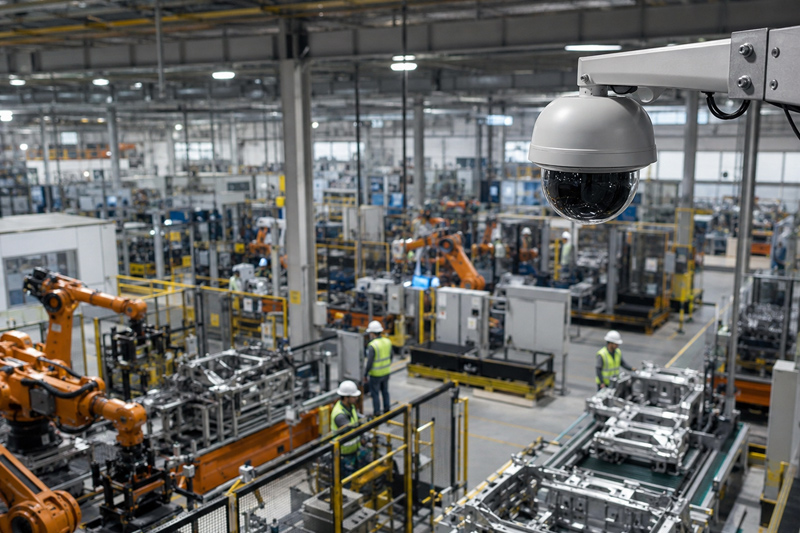
AI video surveillance and computer vision for manufacturing plant safety

“The value was not another camera dashboard. The value was AI turning plant video into evidence-backed safety events that teams could act on.”

Head of Plant Safety
AI Architecture

Live camera streams were converted into classified safety events

The platform consumed live camera feeds and ran computer vision inference against configured plant rules. Events were generated only when a mapped condition was met, such as missing PPE, unauthorised entry, unsafe movement, crowding or vehicle activity in controlled zones.

Each event carried metadata: camera, plant, zone, timestamp, model class, confidence, rule type, snapshot / clip reference, alert status and closure trail. This made the system operationally useful, not just technically impressive.

Video ingest Live camera feeds normalised through plant-wise stream configuration, camera IDs and zone mapping.
Inference Computer vision models detected PPE, restricted-zone entry, movement behaviour, crowding and vehicle events.
Rule engine Plant-specific thresholds, zones, schedules, camera logic and alert suppression rules reduced noise.
Response Alerts, snapshots, clips, escalation status and closure actions were routed into a visual incident workflow.

Want to turn plant cameras into operational safety intelligence?

We build computer vision systems that detect real-world events, preserve visual evidence and connect alerts with response workflows.

Delivery Approach

Configured for plant reality, not demo conditions

Plant video is inconsistent. Lighting, camera height, movement density, reflective PPE, machine shadows, vehicle occlusion and shift patterns all affect detection quality. The implementation needed model tuning, rule calibration and location-wise operating discipline.

The system was designed around practical AI governance: camera onboarding, zone definition, model confidence thresholds, false-positive review, event auditability and plant-wise performance monitoring.
Camera survey Mapped camera positions, coverage gaps, blind spots, lighting conditions and plant-level monitoring objectives.
Model setup Configured PPE, person, vehicle, zone and movement detection models for real manufacturing scenarios.
Rule tuning Adjusted zones, thresholds, schedules, duplicate-alert suppression and event confidence levels.
Workflow rollout Enabled alert routing, evidence review, escalation ownership, dashboards and closure tracking.
Operational Impact

Lower manual monitoring effort, faster response and avoidable cost reduction

The business value came from converting plant video into event intelligence. Safety teams gained faster exception visibility, plant teams gained evidence for action and management gained a better view of repeated violations, unsafe zones and response discipline.

Safety visibility PPE violations, restricted-area movement and unsafe events surfaced without waiting for manual footage review.
Evidence control Snapshots, clips, time stamps, camera references and event metadata created a traceable incident record.
Cost avoidance Reduced manual monitoring effort, repeated safety follow-up and avoidable incident investigation overhead.
Plant governance Dashboards helped compare plants, zones, event types, open actions and recurring safety exceptions.

What the customer gained

  • AI-powered video intelligence across 50+ manufacturing plants.
  • PPE, restricted-area, people movement, vehicle and gate event detection.
  • Plant-wise camera configuration, zone mapping and rule-based event generation.
  • Evidence-backed alerts with image/video proof and operational metadata.
  • False-positive tuning and threshold calibration for real factory conditions.
  • Directional cost savings through reduced manual monitoring, faster response and lower incident overhead.
Technology and Delivery Considerations

The AI layer had to connect vision models with plant operations

The implementation required more than model deployment. It needed video ingest, camera governance, inference orchestration, event metadata, alert routing, dashboarding, evidence storage and model-performance monitoring across plants.

Computer vision Object detection, PPE classification, person detection, vehicle detection and zone-based event logic.
Inference pipeline Live stream ingestion, frame sampling, model execution, confidence scoring and event filtering.
Event intelligence Camera ID, plant ID, zone, timestamp, rule type, confidence, evidence link and closure status.
AI governance False-positive review, threshold tuning, audit trail, user access, monitoring and exception reporting.
Why It Matters

Industrial AI works when models are connected to action

Computer vision creates real enterprise value only when detections are reliable, contextual and connected to response. This engagement helped convert plant camera infrastructure into a safety intelligence layer where exceptions could be detected, evidenced, routed and reviewed across a large manufacturing footprint.

Solutions & Services

Service Areas

Explore Sampark services across transformation, applications, cloud, security, data, automation, and delivery support.